


In the digital hubs of London, the innovation centres of Manchester, and the industrial heartlands of Birmingham, a fundamental shift has occurred. Users no longer tolerate clunky interfaces, confusing navigation, or frustrating journeys. They expect seamless, intuitive, and almost invisible design that delivers value without effort. For UK businesses, this expectation transforms user interface (UI) and user experience (UX) design from a aesthetic consideration into a critical commercial competency. At KS Softech, our UI/UX design services are built on this imperative. We don’t just make digital products look attractive for your UK headquarters; we engineer them to feel intuitive for your customers in Glasgow, to function flawlessly for your clients in Bristol, and to perform profitably by guiding users to conversion with effortless precision. This is design with intent, where every pixel and interaction is mapped to a business outcome and a human need.
The cost of poor UX is quantifiable and severe. It manifests as high bounce rates on your website from visitors in Leeds, abandoned carts in your ecommerce store, and frustrated support calls to your team in Edinburgh. Many businesses treat UI/UX as a final decorative layer, resulting in products that are beautiful yet baffling to use. We dismantles this approach from the outset. We champion a user-centred design philosophy that places the needs, behaviours, and goals of your UK audience at the core of the creative process. Whether we’re designing a complex SaaS dashboard for financial analysts in the City of London, a responsive public service portal for citizens across Wales, or a mobile app for a retail chain with stores from Liverpool to Southampton, our process begins and ends with the user. This human-centric methodology is what separates a mere digital presence from a powerful, engaging, and effective digital product that fosters loyalty and drives growth.
A great experience cannot be simply contingent on assumptions, and our UI/UX process starts with extensive research and strategic planning. We’ve surveyed your industry peers across the UK, spoken with customers to understand their concerns, and developed “User Personas” detailing key demographics to reach out to, such as busy professionals in London looking for efficiencies; families living in Manchester worrying about cost comparisons; or technical buyers in the Midlands needing detailed specs about products. After mapping out different “user journeys”, we’ll identify each user touchpoint and the potential for discomfort (friction) along the path, starting from awareness (searching for a solution) until the consumer has committed to continuing with your offering (long-term retention). By combining strategic insights gained through data analysis and empathy, it enables us to develop and implement designs that actually resolve real problems for real users throughout the varied UK market, thereby providing us with a strong visual foundation for success prior to commencing any design aspect.
Before a website or application can be beautiful, it must be logical. Our UX designers specialise in constructing clear information architecture (IA) and intuitive interaction design. This is the crucial, behind-the-scenes work that organises content and functionality into a structure that feels natural to navigate. We design sitemaps and user flows that ensure a visitor from Cardiff can find critical information in three clicks or less. We prototype interactive wireframes that define how a user books a service, filters a product catalogue, or submits a complex form without confusion. This phase is about removing cognitive load, creating pathways so intuitive that users in Belfast or Brighton feel guided, not lost. It’s the engineering of clarity, ensuring the underlying skeleton of your digital product is robust, sensible, and aligned with user mental models.
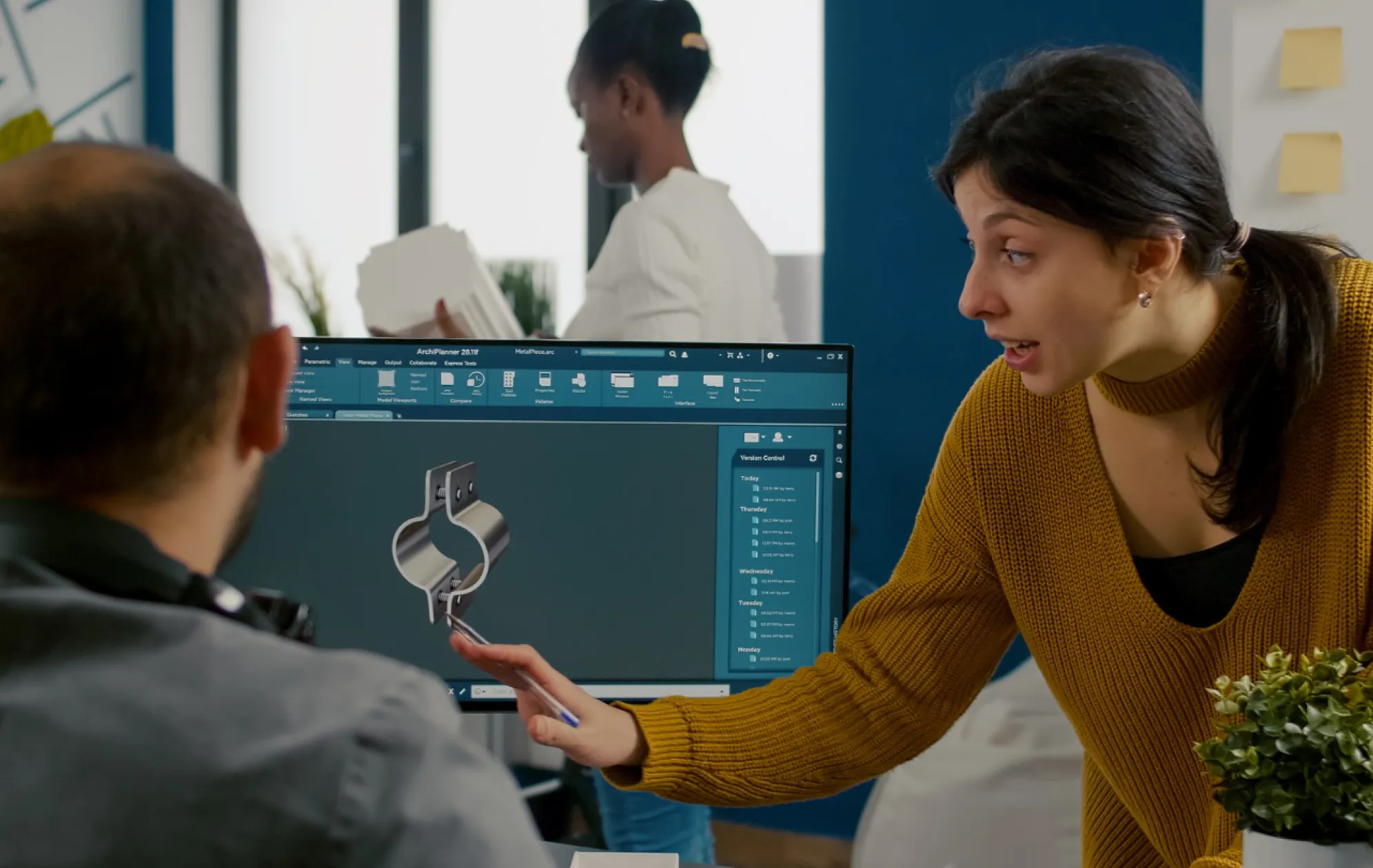

A design is only a hypothesis until it is tested with users. We employ an iterative design process centred on validation. We transform static designs into high-fidelity, interactive prototypes that simulate the final product experience. We then conduct rigorous usability testing sessions with participants matching your target demographic from across the UK. Watching a user from Edinburgh struggle with a checkout step or a manager in Birmingham misinterpret a data visualisation provides invaluable, unbiased insights. We analyse this feedback, identify pain points, and refine our designs. This cycle of build-measure-learn, rooted in the agile principles prevalent in UK tech scene, ensures the final product we deliver is not based on our preferences, but on empirical evidence of what works best for your audience. It de-risks development and guarantees a superior market fit.
After the UX validation, our UI designer incorporates the visual designs into the UX framework. This allows us to merge your brand with function. Your established visual identity or a new visual identity created with our branding team will determine how we would create the look of each interface element, such as buttons, typography, colour scheme, icons, images, etc., for both aesthetics and functional clarity. For example, a luxury brand located in Mayfair may utilise less complicated but elegant designs, while products meant for faster-paced environments, like a productivity application used in busy offices in Leeds, may be designed with more contrast and denser levels of usable data to enhance speed and scanability. All UI design choices utilise visual hierarchies (arrangement of elements), colour psychology (emotions evoked by colours), and consistency across the entire UI in order to create a UI that feels completely different on a smartphone, in Manchester, than any other smartphone in your city. Every interaction adds to your overall user experience and strengthens the perception of your brand.

Professional UI/UX design services focus on creating intuitive, visually engaging and user-centred digital interfaces that improve usability, engagement and conversion for UK businesses.
UI/UX is important because it reduces friction, increases user satisfaction, lowers bounce rates and guides users smoothly toward actions like enquiries, sign-ups and purchases.
KS Softech’s UI/UX process includes user research, journey mapping, information architecture, interface design, interactive prototyping and usability testing.
Good UI/UX design improves conversions by simplifying navigation, clarifying calls-to-action, reducing cognitive load and making every interaction fast and effortless for users.
Yes, we provide usability testing and continuous UX optimisation using real user data, heatmaps and A/B testing to keep improving performance over time.
In an economy where users are increasingly impatient and have many options available to them, having a superior user interface (UI)/user experience (UX) gives you a long-term competitive advantage. This creates loyalty between users who finish each task and become advocates of your brand, versus those who become frustrated and leave without returning again.
Do you want to build the digital experiences that users in London, Manchester, Birmingham, and beyond are going to want to use? We welcome the opportunity to work together with KS Softech, an experienced UK-based UI/UX Design Agency focused on building success for its clients.